

Computer Numerical Control (CNC) machines have transformed modern manufacturing by delivering precision, repeatability, and efficiency at scale. From simple drilling tasks to complex multi-axis machining, CNC machines are used across industries such as automotive, aerospace, electronics, woodworking, and metal fabrication.
This guide explains the 13 types of CNC machines, their applications, and how they are classified based on axes, control systems, components, and functionality.
What is a CNC Machine?
A CNC machine is a computer-controlled manufacturing system that automates machining operations, including cutting, drilling, milling, turning, and engraving. Instead of manual control, the machine follows programmed instructions (G-code) to move tools and workpieces with high accuracy. CNC machines reduce human error, improve consistency, and enable the production of complex geometries that are difficult to achieve manually.
They are widely used for both mass production and precision custom manufacturing. By integrating software, motors, sensors, and tooling, CNC machines ensure efficient, repeatable, and high-quality output across a wide range of materials.
Elements of a CNC Machine System
A CNC machine system consists of several core elements working together. These include the controller (the brain of the machine), drive systems (servo or stepper motors), feedback systems (encoders and sensors), mechanical components (guideways, ball screws, spindles), tooling, and the machine structure (bed).
Software converts design data into machine-readable instructions, while the controller executes them precisely. Auxiliary systems such as coolant, lubrication, and automatic tool changers support performance and longevity. Together, these elements ensure accurate motion control, cutting efficiency, and consistent machining quality.
Click the section to read:
- 13 Main Types of CNC Machines and Their Applications
- Types of CNC Milling Machines
- Types of Spindles in CNC Machines
- Types of CNC Machines According to the Control System
- Types of CNC Machines According to Moving Trail
- Types of CNC Machines Divided by Servo System
- Types of Turrets in CNC Machines
- Types of Guideways in CNC Machines
- Types of Operations in CNC Machines
- Types of Controllers in CNC Machines
- Types of CNC Machine Tools
- Types of CNC Drilling Machines
- Types of CNC Machines Based on the Number of Axes
- Types of CNC Milling Machines
- Types of Tool Holders in CNC Machines
- Types of Inserts in CNC Machines
- Types of Coolant Used in CNC Machines
- FAQ: What are the types of lubrication systems in a CNC machine?
- Types of Tapers in CNC Machine Spindles
- Types of Encoders in CNC Machines
- Types of Maintenance in CNC Machines
- How to Select the Best CNC Machine Type
13 Main Types of CNC Machines and Their Applications
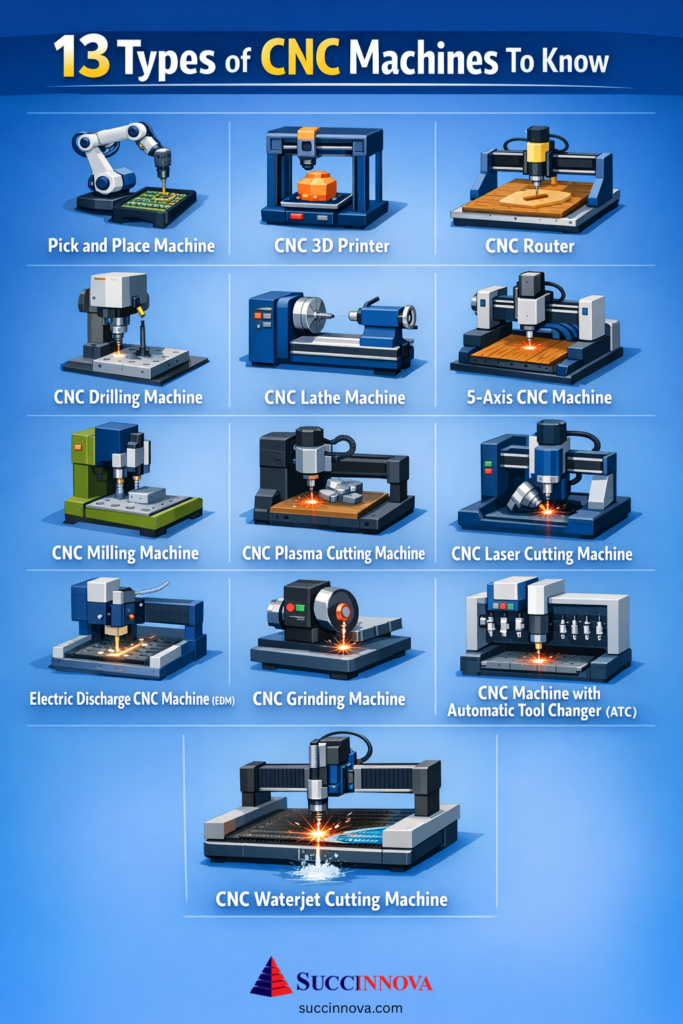
CNC machines are used across industries to deliver high precision, repeatability, and efficiency in manufacturing. Understanding the 13 CNC machine types and their applications helps businesses select the right solution for accurate, cost-effective production.
1. Pick and Place Machine
Pick-and-place machines are primarily used in electronics manufacturing to automatically place components onto printed circuit boards (PCBs). They offer high speed, accuracy, and repeatability, making them essential for surface-mount technology (SMT) assembly lines.
2. CNC 3D Printer
A CNC 3D printer builds parts layer by layer using materials such as plastics, resins, or metals. It is commonly used for prototyping, product development, tooling, and low-volume production where complex shapes are required.
3. CNC Router
CNC routers are ideal for cutting, carving, and engraving wood, plastics, foam, and soft metals. They are widely used in furniture manufacturing, signage, cabinetry, and interior fit-outs.
4. CNC Drilling Machine
These machines automate hole-making operations with high accuracy. Applications include metal fabrication, automotive components, structural steel, and electronics enclosures.
5. CNC Lathe Machine
CNC lathes rotate the workpiece while cutting tools shape it. They are used to produce cylindrical components, including shafts, bushings, and threaded parts.
6. 5-Axis CNC Machine
A 5-axis CNC machine allows simultaneous movement along five axes, enabling complex geometries and undercuts. It is widely used in aerospace, medical devices, and high-precision mould manufacturing.
7. CNC Milling Machine
CNC milling machines remove material using rotating cutting tools. They are used to manufacture complex parts, slots, pockets, and contours in metals and plastics.
8. CNC Plasma Cutting Machine
These machines use a plasma torch to cut electrically conductive materials such as steel and aluminium. They are popular in metal fabrication and structural work.
9. CNC Laser Cutting Machine
Laser cutting machines use focused light beams for high-precision cutting and engraving.
Types of CNC Laser Cutting Machines:
- Fiber Laser Machines: Efficient and fast, ideal for conductive metals such as stainless steel, aluminium, and copper.
- CO₂ Laser Machines: Commonly used for non-metallic materials like wood, acrylic, plastics, and some metals.
- Nd:YAG / Nd:YVO₄ Laser Machines: High-precision systems used in specialised applications such as aerospace and electronics.
10. Electric Discharge CNC Machine (EDM)
EDM machines use electrical discharges to erode material. They are ideal for machining very hard materials and intricate shapes that are difficult to cut with conventional methods.
11. CNC Grinding Machine
These machines are used for high-precision finishing operations, delivering excellent surface quality and dimensional accuracy for tools and components.
12. CNC Machine with Automatic Tool Changer (ATC)
Machines with ATCs automatically switch tools during machining, reducing downtime and increasing productivity, especially in batch and mass production.
13. CNC Waterjet Cutting Machine
Waterjet machines cut materials using high-pressure water mixed with abrasives. They are suitable for metals, stone, glass, and composites without generating heat.
Automatic Tool Changer (ATC)
An ATC is a CNC machine mechanism that automatically swaps cutting tools during a machining cycle without manual intervention. It allows the machine to switch between drills, end mills, taps, or other tools as required by the programme, reducing downtime and improving productivity. ATCs ensure consistent accuracy, support complex multi-operation machining, and are widely used in CNC milling machines, machining centres, and multi-tasking CNC systems.
Disclaimer: This is an AI-generated image. AI images may have inaccuracies.
Types of CNC Milling Machines
CNC milling machines are classified based on spindle orientation, machine structure, and the type of work they are designed to perform. Each type offers distinct advantages in terms of accuracy, rigidity, chip removal, and production speed. Choosing the right CNC milling machine depends on the component’s complexity, material type, and production volume.
The most common types are Vertical Machining Centres (VMC) and Horizontal Machining Centres (HMC).
- VMCs have a vertically oriented spindle and are widely used for general-purpose milling, prototyping, and precision parts due to their ease of operation and visibility.
- HMCs feature a horizontal spindle, which improves chip evacuation and reduces cycle times, making them suitable for high-volume production.
Other common types include bed mills, which provide strong support for heavier workpieces; gantry mills, ideal for large, heavy components such as plates and frames; and drill/tap machining centres, which are optimised for high-speed drilling, tapping, and light milling in mass-production environments.
Types of Spindles in CNC Machines
The spindle is one of the most critical components of a CNC machine, as it directly affects cutting speed, accuracy, surface finish, and overall machining performance.
Different spindle types are designed to suit specific materials, cutting forces, and production requirements, making spindle selection a key factor in achieving consistent, precise results.
CNC machines commonly use belt-driven spindles, which offer smooth operation and good torque at lower speeds; gear-driven spindles, preferred for heavy-duty machining due to their high torque and rigidity; and direct-drive spindles, which deliver high speed, low vibration, and excellent accuracy for precision and high-speed machining.
In addition, motorised spindles integrate the motor directly into the spindle housing, reducing mechanical losses and improving efficiency. To maintain accuracy across all spindle types, CNC machine offsets are vital.
Work offsets (such as G54–G59) define the workpiece position; tool geometry offsets account for tool length and diameter; and wear offsets compensate for gradual tool degradation, ensuring precise positioning and consistent machining quality throughout production.
Types of CNC Machines According to the Control System
CNC control systems determine how a machine moves, positions tools, and executes machining operations. Based on motion control and path accuracy, CNC machines are commonly classified into the following control system types.
- Point-to-Point (PTP) CNC Controller: In a PTP system, the tool moves between predefined positions, but the path is not controlled. It is primarily used for drilling, punching, and spot welding, with machining limited to specific locations.
- Straight-Cut Positioning Control: This control system enables the tool to move along a single axis in a straight line. It is suitable for simple linear cutting operations such as slotting or straight milling, where simultaneous multi-axis movement is not required.
- Contouring Path CNC System: A contouring CNC system controls multiple axes simultaneously, enabling the tool to follow complex, continuous paths. It is used for milling, turning, and 3D surface machining where high precision and smooth geometry are essential.
Types of CNC Machines According to Moving Trail
CNC machines can be classified by the path, or moving trail, followed by the cutting tool during operation. This classification determines how the tool moves between points and how accurately it can machine simple or complex shapes.
- Point Control: In point control systems, the tool moves from one predefined position to another without considering the path between them. Machining occurs only at specific points, making this system ideal for drilling, punching, and spot welding operations.
- Linear Control: Linear control allows the cutting tool to move in a straight line between two points at a controlled feed rate. It is commonly used for simple cutting, slotting, and straight-edge machining, where continuous, single-axis motion is required.
- Contouring Control: Enables simultaneous movement along two or more axes, allowing the tool to follow complex, continuous paths. This system is essential for milling, turning, and machining intricate profiles, curves, and three-dimensional surfaces.
Types of CNC Machines Divided by Servo System
Servo systems classify CNC machines based on how motion control feedback is managed. The choice of the servo system directly impacts positioning accuracy, speed, and overall machining precision.
- Open-Loop Control System: In an open-loop system, the controller sends commands to the motor without receiving feedback on the actual position. These systems are cost-effective and simple but are best suited for light-duty applications where high precision is not critical.
- Semi-Closed Loop Control System: A semi-closed loop system uses encoders mounted on the motor or ball screw to provide partial feedback. It offers better accuracy than open-loop systems while remaining more economical than fully closed-loop configurations.
- Closed-Loop Control System: Closed-loop systems continuously monitor actual axis position using encoders or linear scales. The controller corrects errors in real time, delivering high accuracy, fast response, and reliable performance for high-speed and precision machining.
Types of Turrets in CNC Machines
CNC turrets are tool-holding systems used mainly in CNC lathes and turning centres to index multiple tools quickly and accurately. They play a key role in reducing tool change time, improving machining efficiency, and enabling complex multi-operation processes within a single setup.
Based on the Drive Mechanism
- Servo Turret: A servo turret uses a servo motor with encoder feedback to achieve fast, accurate, and repeatable tool indexing. It is commonly used in high-end CNC lathes where precision, speed, and reliability are critical.
- Hydraulic Turret: Hydraulic turrets operate using hydraulic pressure, providing high clamping force and excellent rigidity. They are well-suited for heavy-duty cutting operations where tool stability and vibration resistance are essential.
- Electric / Electric-Powered Turret: These turrets use an electric motor for indexing and locking. They are simpler and more economical than servo or hydraulic turrets, making them suitable for standard machining tasks and cost-sensitive applications.
Based on the Tool Mounting System (Interface)
- VDI (Verein Deutscher Ingenieure): VDI turrets feature modular tool holders that enable fast, convenient tool changes. They are flexible and easy to set up, though they generally provide lower clamping rigidity than BMT systems.
- BMT (Base Mount Turret): BMT turrets mount tools directly onto the turret face, providing high rigidity and precision. They are ideal for heavy cutting, high-accuracy machining, and advanced turn-mill applications.
- BOT (Bolt-on Tooling): In BOT systems, tools are bolted directly to the turret disc. This design offers good rigidity at a lower cost but lacks the quick-change convenience and modularity of VDI-style tooling.
- Pneumatic Turret: These turrets rely on compressed air for indexing and locking. They are typically found on simpler, entry-level CNC machines and are best suited for light-duty machining with low cutting forces.
Based on Functionality and Structure
- Power / Live Turret: A live turret includes an integrated motor that drives rotating tools, enabling milling, drilling, and tapping on a lathe. This allows complex turn-mill operations to be completed in a single setup.
- Drum / Disc Turret: These are the most common turret designs, with tools mounted around a cylindrical drum or on a flat disc face. They provide reliable indexing and are widely used in standard CNC turning applications.
- Y-Axis Turret: A Y-axis turret allows vertical movement in addition to standard X and Z axes. This enables off-centre milling and machining of complex features without repositioning the workpiece.
Based on Orientation
- Horizontal Turret: These horizontal turrets rotate around a horizontal axis and are commonly used in slant-bed CNC lathes. They support efficient chip evacuation and are suitable for most general turning operations.
- Vertical Turret: Rotates on a vertical axis and is typically used in vertical lathes. They are ideal for large, heavy, or awkwardly shaped components where gravity aids workpiece stability.
Specialised Turrets
- Multiple Turrets (Multi-Tasking): Multi-turret machines use two or more turrets to perform simultaneous operations on a single workpiece. This significantly reduces cycle time and increases productivity in high-volume and complex machining environments.
Types of Guideways in CNC Machines
Guideways are precision surfaces that guide and support the movement of machine axes in a CNC machine. Their design directly affects accuracy, speed, load capacity, and vibration control. Different guideway types are selected based on machining requirements, material removal rates, and machine rigidity.
Key Types of Guideways
- Linear Guideways (Anti-Friction): Linear guideways use ball or roller bearing carriages running on hardened rails to deliver smooth, fast, and highly accurate motion. They are ideal for high-speed machining and light-to-medium loads, such as aluminium and precision component manufacturing.
- Box / Hardened Guideways (Slideways): Box guideways rely on metal-to-metal contact, typically cast iron on cast iron, with a large contact area. They provide excellent rigidity, vibration damping, and stability, making them suitable for heavy-duty cutting and rough machining operations.
- Hybrid Guideways: Hybrid guideway systems combine linear guideways for the X and Y axes with box guideways on the Z-axis. This design balances high-speed movement with vertical stability, improving overall machining performance and accuracy.
- Hydrostatic Guideways: Hydrostatic guideways use a pressurised fluid film to separate the moving parts, eliminating direct contact. They offer exceptional precision, high load capacity, and zero stick-slip, but are costly and used mainly in ultra-precision machines.
Common Guideway Geometries
- V-Type, Flat, and Dovetail Guideways: These traditional sliding-guideway shapes are often used in combination to control motion and load distribution. They provide good guidance, accuracy, and rigidity, especially in conventional and heavy-duty CNC machine designs.
- Cylindrical Guideways: Cylindrical guideways support motion uniformly around the axis and are typically used for short travel lengths. They are suitable for lighter loads, high-speed operation, or specialised CNC applications that require compact designs.
Types of Operations in CNC Machines
CNC machines perform a wide range of machining operations with high accuracy and repeatability. Each operation is programmed to achieve specific shapes, dimensions, and surface finishes, depending on the component design and machining requirements.
CNC Lathe Operations (Turning)
- Facing: A process used to create a flat, smooth surface at the end of a rotating workpiece. This operation ensures accurate length control and provides a clean reference surface for subsequent machining processes.
- Turning: It reduces a workpiece’s diameter by removing material from its outer surface. It includes straight turning for uniform diameters and taper turning for producing conical or angled profiles.
- Grooving: It involves cutting narrow channels or recesses on the outer diameter, inner diameter, or face of a workpiece. It is commonly used for O-ring grooves, snap rings, and functional clearances.
- Threading: It creates internal or external screw threads by synchronising tool movement with spindle rotation. CNC threading ensures consistent pitch, depth, and accuracy for fasteners and threaded components.
- Boring: It enlarges and refines an existing hole to achieve precise diameter, alignment, and surface finish. It is typically performed after drilling when tight tolerances or improved concentricity are required.
- Knurling: It produces a textured or patterned surface on a cylindrical part. It improves grip and handling and is commonly used on knobs, handles, and manual adjustment components.
- Parting: Known as cut-off, parting separates the finished component from the remaining stock. It is usually the final operation in turning and requires precise tool positioning to ensure clean separation.
Position Sensors
- Rotary and Linear Encoders: Encoders measure the rotational or linear movement of machine axes and spindles. They provide precise position feedback to the controller, ensuring accurate tool positioning, repeatability, and high-precision multi-axis machining.
- Limit Switches and Proximity Sensors (Inductive, Capacitive): These sensors detect axis limits, tool presence, or workpiece clamping status. They are commonly used for machine homing, safety interlocks, and preventing over-travel or collisions during operation.
Speed Sensors
- Pulse Encoders and Tachogenerators: Speed sensors convert rotational speed into electrical signals to monitor spindle and axis movement. They help maintain consistent cutting speeds and enable real-time adjustments to ensure stable, efficient machining.
Tool Monitoring Sensors
- Force and Strain Sensors: These sensors measure cutting forces during machining to detect abnormal loads. They help identify tool wear, breakage, or improper cutting conditions before they affect part quality.
- Vibration Sensors (Accelerometers): Accelerometers monitor machine and tool vibrations during cutting. Excessive vibration indicates tool wear, chatter, or poor setup, allowing corrective action to improve surface finish and tool life.
- Image and Optical Sensors: Optical sensors visually monitor tool condition and surface quality. They are used in advanced CNC systems for automated inspection, wear detection, and quality control during or after machining.
Temperature Sensors
- RTDs (Resistance Temperature Detectors): RTDs measure temperature changes in spindles, tools, and workpieces. They help prevent thermal distortion, overheating, and dimensional inaccuracies caused by excessive heat during machining.
Workpiece and Process Sensors
- Pressure Sensors: Pressure sensors monitor clamping force in fixtures and hydraulic systems. They ensure the workpiece is securely held, reducing the risk of movement, vibration, or machining errors.
- Vision Sensors: Vision sensors check part presence, orientation, alignment, and surface defects. They support automated inspection and reduce human intervention in high-volume CNC production.
Audio Sensors (Microphones): Audio sensors analyse machining sounds to assess cutting conditions. Changes in sound patterns can indicate tool wear, breakage, or unstable machining, enabling early intervention.
Types of Controllers in CNC Machines
CNC controllers act as the brain of the machine, interpreting programmes and controlling axis movement, spindle speed, and tool functions. They are classified by architecture, feedback mechanism, operating mode, axis capability, and technological generation.
Based on Architecture
- Stand-Alone / Traditional Controllers: Proprietary industrial systems such as FANUC, Siemens Sinumerik, and Heidenhain. They are highly reliable, robust, and optimised for specific CNC machines in demanding production environments.
- PC-Based Controllers: These controllers use a standard PC with specialised CNC software. They offer flexibility, easy customisation, and lower costs, making them suitable for prototyping, small workshops, and educational or DIY CNC setups.
- Distributed Controllers: Designed for advanced automation, these controllers manage multiple machines or axes simultaneously. They are commonly used in smart factories and integrated manufacturing systems for coordinated, high-efficiency production.
Based on the Feedback Loop (Precision)
- Open-Loop System: The controller sends commands without receiving position feedback. It is simple and cost-effective but less accurate, making it suitable for light-duty or low-precision CNC applications.
- Closed-Loop System: Uses encoders or sensors to continuously monitor actual position and speed. The controller corrects errors in real time, ensuring high accuracy, fast response, and reliable precision machining.
Based on Operation Mode
- Point-to-Point (PTP) Control: Moves the tool between predefined positions without controlling the path in between. Commonly used for drilling, punching, and spot machining operations.
- Path / Contouring Control: Controls continuous tool movement along a defined path. It is essential for milling, turning, and 3D machining where smooth, precise contours are required.
Based on Axes Capability
- 2 / 2.5-Axis Controllers: Used in simpler CNC machines and lathes, where X and Y move together, and Z is controlled separately for depth operations.
- 3-Axis Controllers: The most common type is controlling X, Y, and Z axes simultaneously. Suitable for standard milling, drilling, and general machining tasks.
- 4 / 5-Axis Controllers: Include additional rotary axes (A, B, or C) for complex geometries. Widely used in aerospace, medical, and high-precision manufacturing.
Based on Generation
- Analog Controls: Older control systems based on relays and analogue signals. They offer limited flexibility and are largely replaced by modern CNC technology.
- Digital / CNC Controls: Modern processor-based controllers that support simulation, adaptive control, and high-speed machining with superior accuracy and reliability.
Types of CNC Machine Tools
CNC tools are cutting instruments used to remove material, shape components, and achieve precise dimensions and surface finishes. Selecting the right tool is essential for machining accuracy, efficiency, tool life, and overall product quality.
- End Mills: Versatile cutting tools with tips and sides, used for slotting, profiling, and pocketing. Common types include square end mills for general cutting, ball nose for 3D contours, and bull nose for filleted edges.
- Face Mills: Designed to machine large, flat surfaces efficiently. They use multiple cutting inserts to deliver smooth finishes and are commonly used for surface finishing and material removal in milling operations.
- Drill Bits: They are used to create holes in a workpiece. Common types include twist drills for general drilling, centre drills for accurate hole starting, and ejector drills for deep-hole applications.
- Reamers: They are precision tools used to enlarge existing holes to an exact diameter. They produce excellent surface finishes and tight tolerances, making them ideal for applications requiring high dimensional accuracy.
- Taps: Used to cut internal threads in predrilled holes. CNC tapping ensures consistent thread depth, pitch, and alignment, reducing the risk of tap breakage and improving thread quality.
- Boring Bars: Used to enlarge, align, and refine existing holes. They provide precise control over diameter, concentricity, and surface finish, especially in applications requiring tight tolerances.
- Thread Mills: They cut internal or external threads using circular interpolation. They are ideal for hard materials, large thread diameters, and asymmetric parts, offering better control and reduced tool breakage compared to taps.
- Chamfer Mills: They are used to bevel edges, remove burrs, and create countersinks. They improve part safety, assembly fit, and surface finish by eliminating sharp edges.
- Fly Cutters: They use a single cutting point to machine wide, flat surfaces. They are typically used for shallow cuts and fine surface finishing, especially on large workpieces.
- Turning Tools and Inserts: Used on CNC lathes for facing, profiling, grooving, and diameter reduction. Carbide inserts are commonly used due to their durability, consistency, and ease of replacement.
- Specialised Tools: These specialised CNC tools include engraving cutters, Woodruff cutters, and gear cutters. These tools are designed for specific machining tasks that require unique profiles, markings, or complex geometries.
Types of CNC Drilling Machines
CNC drilling machines are designed to produce accurate and repeatable holes across a wide range of materials and component sizes. Different types are used depending on hole depth, precision requirements, production volume, and workpiece dimensions.
- End Mills: End mills are versatile cutting tools with tips and sides, used for slotting, profiling, and pocketing. Common types include square end mills for general cutting, ball nose for 3D contours, and bull nose for filleted edges.
- Face Mills: Face mills are designed to efficiently machine large, flat surfaces. They use multiple cutting inserts to deliver smooth finishes and are commonly used for surface finishing and material removal in milling operations.
- Drill Bits: Drill bits are used to create holes in a workpiece. Common types include twist drills for general drilling, centre drills for accurate hole starting, and ejector drills for deep-hole applications.
- Reamers: Precision tools used to enlarge existing holes to an exact diameter. They produce excellent surface finishes and tight tolerances, making them ideal for applications requiring high dimensional accuracy.
- Taps: Taps are used to cut internal threads in pre-drilled holes. CNC tapping ensures consistent thread depth, pitch, and alignment, reducing the risk of tap breakage and improving thread quality.
- Boring Bars: Boring bars are used to enlarge, align, and refine existing holes. They provide precise control over diameter, concentricity, and surface finish, especially in applications requiring tight tolerances.
- Thread Mills: Thread mills cut internal or external threads using circular interpolation. They are ideal for hard materials, large thread diameters, and asymmetric parts, offering better control and reduced tool breakage compared to taps.
- Chamfer Mills: Chamfer mills are used to bevel edges, remove burrs, and create countersinks. They improve part safety, assembly fit, and surface finish by eliminating sharp edges.
- Fly Cutters: Fly cutters use a single cutting point to machine wide, flat surfaces. They are typically used for shallow cuts and fine surface finishing, especially on large workpieces.
- Turning Tools and Inserts: Turning tools and inserts are used on CNC lathes for facing, profiling, grooving, and diameter reduction. Carbide inserts are commonly used due to their durability, consistency, and ease of replacement.
- Specialised Tools: Specialised CNC tools include engraving cutters, Woodruff cutters, and gear cutters. These tools are designed for specific machining tasks that require unique profiles, markings, or complex geometries.
Types of CNC Machines Based on the Number of Axes
CNC machines are classified by the number of axes they can move simultaneously, which determines machining complexity, flexibility, and precision. More axes allow complex geometries to be produced with fewer setups and higher accuracy.
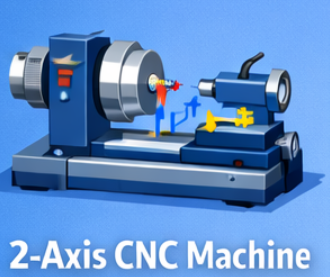
- 2-Axis CNC Machine: Operates along two axes, typically X and Z. It is commonly used in basic turning and simple cutting operations where part geometry is straightforward.
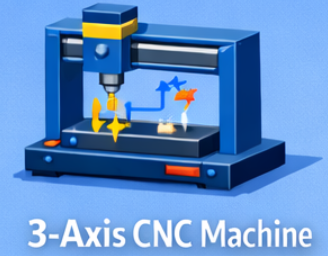
- 3-Axis CNC Machine: Moves along X, Y, and Z axes and is the most widely used CNC configuration. Ideal for standard milling, drilling, and machining flat or prismatic components.
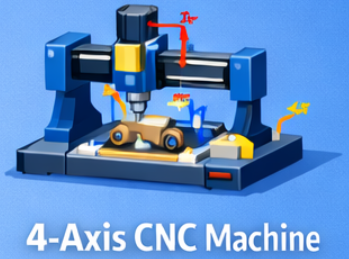
- 4-Axis CNC Machine: Adds a rotational axis to the standard three axes. This enables multi-sided machining without repositioning, improving accuracy and productivity.
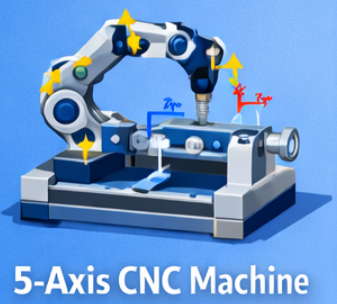
- 5-Axis CNC Machine: Allows simultaneous movement along three linear and two rotational axes. Used for complex, multi-directional machining such as aerospace components, molds, and intricate contours.
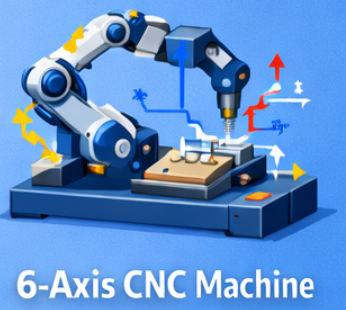
- 6-Axis CNC Machine: Incorporates an additional rotational or linear axis for greater flexibility. Often used in advanced automation, robotic machining, and complex part handling applications.
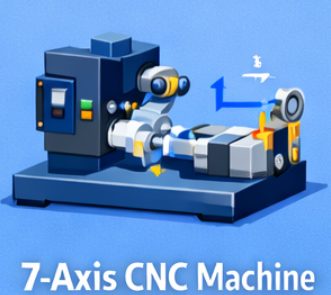
- 7-Axis CNC Machine: Provides extended motion control for highly complex geometries. Common in aerospace and medical manufacturing, where precision machining of intricate, curved components is required.
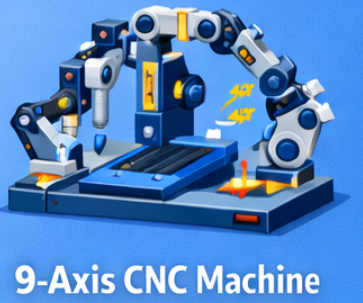
- 9-Axis CNC Machine: Combines turning and milling with multiple spindles and tool paths. Enables the complete machining of complex parts in a single setup, reducing cycle time and handling requirements.
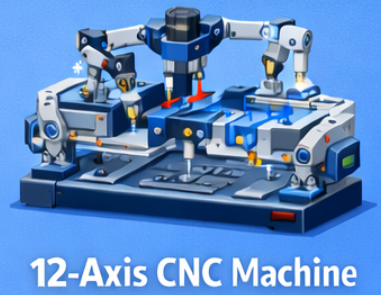
- 12-Axis CNC Machine: Represents ultra-advanced multitasking CNC systems. Designed for high-volume, high-precision production, these machines perform multiple operations simultaneously with exceptional accuracy and efficiency.
Types of CNC Milling Machines
CNC milling machines are classified by spindle orientation:
- Vertical Machining Centres (VMC): Common for general-purpose milling.
- Horizontal Machining Centres (HMC): Better chip evacuation and high-volume production. Other types include bed mills, gantry mills, and drill/tap machining centres.
CNC Machine Offsets
CNC machines use four main types of offsets:
- CNC Machine Offsets: CNC offsets enable the machine to determine part and tool positions, ensuring accuracy, repeatability, and consistent machining results.
- Work Offsets (G54–G59): Work offsets define the location of the part datum relative to the machine zero. They allow the same program to run on different setups or multiple parts by shifting the coordinate system.
- Tool Geometry Offsets: These offsets account for the actual tool length and diameter. They ensure the cutting tool reaches the correct depth and position, regardless of tool size variations or tool changes.
- Wear Offsets: These make small, incremental adjustments to compensate for tool wear during machining. This helps maintain dimensional accuracy without altering the main program or tool geometry offsets.
Types of CNC Machines by Control System
CNC machines are classified by control systems based on how tool movement is managed between positions. Each control type determines machining capability, accuracy, and suitability for specific operations.
- Point-to-Point (PTP) Control: The tool moves rapidly between predefined points, with machining performed only at those locations. Path accuracy between points is not controlled, making it ideal for drilling, punching, spot welding, and simple hole-making operations.
- Straight Cut Positioning Control: The tool moves in a straight line between two points at a controlled feed rate while cutting. This system is commonly used for operations such as milling slots, turning, and facing, where linear accuracy is essential.
- Contouring Path Control: Also known as continuous-path control, this system precisely controls tool motion along multiple axes simultaneously. It is used to create complex profiles, curves, and 3D surfaces for molds, dies, and aerospace components.
Types of CNC Machines by Servo System
CNC machines are also classified by their servo systems, which define how motion is controlled and how feedback is used to maintain positioning accuracy and reliability during machining.
- Open-loop control system: This system operates without feedback. The controller sends commands to the motor, assuming the motor moves accurately. It is simple and cost-effective, commonly used in light-duty CNC machines with stepper motors.
- Semi-Closed Loop Control System: Feedback is taken from the motor encoder rather than the machine table. It improves positioning accuracy over open-loop systems while keeping costs moderate, making it suitable for mid-range CNC milling and turning machines.
- Closed-Loop Control System: This system uses feedback from encoders or scales mounted directly on the machine axes. It continuously corrects positioning errors, offering high precision and reliability for advanced, high-accuracy CNC machining applications.
Types of CNC Lathe Machines
CNC lathes are categorized by orientation, specialization, bed design, and functional capability. Each type is engineered to handle specific part sizes, production volumes, and precision requirements.
By Machine Orientation
- Horizontal CNC Lathes: These are the most commonly used machines for general turning operations. The horizontal spindle layout enables efficient chip flow and facilitates loading, making it suitable for facing, boring, threading, and standard production work.
- Vertical CNC Lathes: Vertical CNC lathes are designed for large, heavy, or complex components. The vertically oriented spindle uses gravity to securely hold the workpiece, reducing setup challenges and improving stability during machining of large-diameter parts.
- Slant Bed Lathes: Slant bed lathes feature an angled bed that improves rigidity and chip evacuation. This design enhances cutting performance, enables higher spindle speeds, and provides better operator access, making it ideal for high-precision, high-productivity machining.
By Specialization
- Swiss-Type Lathes: Swiss-type lathes are designed to produce small-diameter, long, and slender parts with extreme accuracy. A guide bushing supports the workpiece near the cutting area, minimizing deflection and making these machines ideal for precision applications.
- Multi-Spindle Lathes: Multi-spindle lathes use multiple spindles to perform multiple operations simultaneously. They are designed for high-volume manufacturing, significantly reducing cycle times while maintaining consistency and efficiency in producing complex parts.
- Gang-Type Lathes: Gang-type lathes arrange tools in a straight line rather than using a turret. This setup enables extremely fast tool changes and reduces idle time, making it well-suited for simple parts produced in large quantities.
By Bed Construction
- Flat Bed Lathes: Flat-bed lathes have a traditional horizontal bed and are commonly used to machine long or heavy components. Their robust design provides excellent stability and is suitable for heavy-duty turning applications.
- Slant Bed Lathes: Slant-bed lathes offer improved ergonomics and more efficient chip disposal than flat-bed designs. The angled structure enables higher machining speeds and improves surface finish, making it popular in modern CNC shops.
- Multi-Tasking / Turning Centers: Multi-tasking CNC turning centers combine turning and milling capabilities into a single machine. Equipped with sub-spindles, live tooling, and multiple turrets, they enable the complete machining of complex parts in a single setup, reducing lead time and improving accuracy.
Types of Tool Holders in CNC Machines
Tool holders play a critical role in CNC machining by securely clamping cutting tools to the spindle. The right tool holder improves accuracy, surface finish, tool life, and overall machining stability across a range of applications.
Key CNC Tool Holder Types (By Clamping Method)
- Collet Chucks (ER Collets): ER collet chucks use slotted collets to grip a range of tool shank diameters with good concentricity. They are versatile and commonly used for light milling, drilling, and tapping operations in general-purpose machining.
- End Mill Holders (Side-Lock / Weldon): End mill holders use a set screw to lock onto a flat on the tool shank, providing a secure grip. They offer high rigidity and are ideal for heavy milling, roughing, and high-torque cutting operations.
- Shrink-Fit Holders: Shrink-fit holders clamp tools by thermal expansion and contraction. Heating expands the holder, and cooling creates an extremely tight grip, delivering excellent accuracy, balance, and rigidity for high-speed and precision machining.
- Hydraulic Chucks: Hydraulic chucks use internal hydraulic pressure to clamp the tool evenly. They provide excellent concentricity, vibration dampening, and surface finish, making them well-suited for finishing operations and high-precision milling.
- Milling Chucks: Milling chucks use a mechanical locking system with a nut and roller bearings to generate a high clamping force. They are designed for aggressive, heavy-duty milling where a strong grip and stability are essential.
- Tap Holders: Designed specifically for threading operations. Available in rigid, floating, and synchronous types, they compensate for feed mismatches, reduce tapping torque, and help prevent tap breakage.
Tool Holder Taper Standards
- CAT (V-Flange): CAT tool holders are widely used in North America and feature a V-flange design. Available in sizes such as CAT40 and CAT50, they are known for their reliability and compatibility with a wide range of CNC machining centers.
- BT: BT holders feature a symmetrical flange design that improves balance and stability. Common in Japanese and other Asian markets, they are well-suited to high-speed machining and precision milling applications.
- HSK (Hollow Shank Taper): HSK holders feature a hollow shank with dual contact on both the taper and flange. This design offers superior rigidity, accuracy, and balance, especially at high spindle speeds.
- PSC (Polygon Taper): PSC holders use a polygon-shaped taper for precise positioning and strong torque transmission. They support fast, automatic tool changes and are commonly used in advanced, multi-tasking CNC machines.
Common Tool Holder Components
A CNC tool holder typically consists of a taper that fits into the machine spindle, a flange for use with an automatic tool changer, and a clamping mechanism, such as a collet, hydraulic sleeve, or mechanical locking system.
Types of Inserts in CNC Machines
CNC inserts are replaceable cutting tips used in machining tools to perform turning, milling, drilling, and threading. They are classified based on shape, material, and application to suit different cutting conditions and workpiece materials.
By Shape (Geometry)
- Round (R): Round inserts offer the strongest cutting edge due to their continuous geometry. They are ideal for heavy roughing cuts and high feed rates, while also delivering good surface finish in profiling operations.
- Square (S): Square inserts provide four usable cutting edges, making them economical and durable. They are commonly used for medium- to heavy-duty cutting, where strength and cost efficiency are important.
- Diamond / Rhombic (C, D, V): Diamond-shaped inserts, such as 80° (C) or 35° (V), are widely used in turning. They are versatile, capable of both roughing and finishing, and excel at profiling and precision work.
- Triangle (T): Triangle inserts have three cutting edges and are suitable for general-purpose turning. They provide good access to corners but are weaker than square or diamond inserts under heavy loads.
- Trigon (L): Trigon inserts combine features of triangular and diamond shapes. They offer three cutting edges with better strength than standard triangles, making them suitable for balanced roughing and finishing operations.
By Material
- Carbide: Carbide inserts are the most commonly used due to their hardness and wear resistance. They are suitable for machining a wide range of materials, including steels, cast iron, and non-ferrous metals.
- Ceramic: Ceramic inserts are designed for high-speed machining of hard or heat-resistant materials. They perform well at elevated temperatures but are brittle and require stable cutting conditions.
- PCD (Polycrystalline Diamond): PCD inserts are used for non-ferrous metals such as aluminum and copper, as well as for composites and plastics. They provide exceptional wear resistance and surface finish, but are not suitable for steel.
- CBN (Cubic Boron Nitride): CBN inserts are ideal for machining hardened steels and cast iron. They maintain hardness at very high temperatures, making them suitable for finishing hard materials without grinding.
- Cermet: Cermet inserts combine ceramic and carbide properties. They are commonly used for finishing operations, offering excellent surface finish, low cutting forces, and good wear resistance.
By Application / Function
- Turning Inserts: Turning inserts are used on CNC lathes for external and internal turning, facing, and profiling. They are available in various shapes and grades to match roughing or finishing requirements.
- Milling Inserts: Milling inserts are used in face mills, end mills, and shell mills. They are designed to handle interrupted cuts and achieve high material-removal rates in milling operations.
- Drilling Inserts: Drilling inserts are used in indexable drills to create holes. They allow higher speeds and easier replacement compared to solid drills, improving productivity in large-diameter drilling.
- Grooving and Threading Inserts: These inserts have specialized profiles for cutting precise grooves and screw threads. They ensure accuracy, consistency, and proper chip control in grooving and threading operations.
Key Characteristics of CNC Inserts
| Feature | Description |
| Positive vs. Negative Inserts | Positive inserts have clearance angles greater than 0°, reducing cutting forces and are suited for light machining. Negative inserts have angles below 90° (e.g., 7°), provide more cutting edges, and are ideal for heavy roughing. |
| Chip Breakers | Chip breakers are built into the geometry of inserts that control chip flow. They curl and break chips effectively, improving safety, surface finish, and machining efficiency. |
Types of Coolant Used in CNC Machines
Coolants in CNC machining help dissipate heat, reduce friction, extend tool life, and improve surface finish. The choice of coolant depends on the machining operation, material, cutting speed, and required finish.
- Water-Soluble Coolants (Soluble Oils): These are mineral oils emulsified in water with emulsifiers, forming a milky solution. They offer good cooling and moderate lubrication, making them cost-effective and suitable for general machining operations.
- Synthetic Coolants: Fully water-based chemical solutions with no oil. They provide excellent heat dissipation, cleanliness, and stability, making them ideal for high-speed cutting, hard materials, and precision machining.
- Semi-Synthetic Coolants: These coolants combine synthetic fluids with a small amount of oil. They offer a balanced mix of cooling and lubrication, making them versatile and widely used across a range of CNC machining applications.
- Straight Oils (Neat Oils): 100% oil (petroleum, mineral, or vegetable-based), not mixed with water. Straight oils are used without dilution and provide maximum lubrication. They are preferred for operations like tapping and threading, where surface finish and tool protection are critical, especially in Swiss-type machining.
FAQ: What are the types of lubrication systems in a CNC machine?
Common CNC lubrication systems include automatic centralized oil or grease systems, oil mist, air-oil, oil bath or splash, and minimum quantity lubrication (MQL). Each system delivers controlled lubrication to critical components, ensuring smooth operation, reduced wear, and long service life.
Types of Tapers in CNC Machine Spindles
CNC machine spindles use standardized tapers to securely hold tool holders while ensuring accuracy and rigidity. The most common are 7/24 steep tapers for general machining and HSK tapers for high-speed, high-precision applications.
- CAT Taper (Caterpillar / V-Flange): CAT tapers are widely used in North America and feature a 7/24 steep taper. They use inch-based retention knobs and are available in sizes like CAT30, CAT40, and CAT50 for milling applications.
- BT Taper (Bonsai Taper): BT tapers are similar to CAT tapers but feature a symmetrical flange design and metric threads. Common in Asia and Europe, they offer better balance at high speeds and are available in BT30, BT40, and BT50.
- HSK Taper (Hohl Shaft Kegel): HSK is a hollow, short taper with a 1:10 ratio that provides dual contact on the taper and face. This design delivers excellent rigidity, accuracy, and balance, making it ideal for high-speed and precision machining.
- SK / ISO Taper (DIN 69871): SK or ISO tapers follow the 7/24 steep taper standard and are commonly used in European CNC machines. They provide reliable toolholding and are suitable for high-precision milling and general machining.
- Capto Taper (Polygon Taper): Capto tapers use a polygon-shaped interface that allows both turning and milling. They provide high torque transmission, excellent repeatability, and quick tool changes, making them popular in multi-tasking CNC machines.
- Morse Taper (MT): Morse tapers are self-holding tapers mainly found in smaller or older CNC machines and drill presses. They are simple and reliable but not suitable for high-speed or heavy cutting operations.
Types of Encoders in CNC Machines
Encoders in CNC machines provide precise feedback on position, speed, and movement, enabling accurate control of machine axes and spindles. They are classified based on motion type, output signal, and sensing technology.
By Motion Type
- Rotary Encoders: Mounted on motor shafts, they measure angular position and speed. They are widely used in spindle and servo motors to ensure accurate rotation and controlled motion.
- Linear Encoders: These directly measure the linear position of machine axes such as X, Y, and Z. By bypassing mechanical components, they eliminate backlash errors and provide very high positioning accuracy.
- Angle Encoders: These are high-precision rotary encoders used on rotary tables and indexing axes. They deliver extremely accurate angular measurements required for complex multi-axis machining.
By Output Signal
- Absolute Encoders: These provide a unique position value immediately after power is switched on. They retain exact position information even after power loss, eliminating the need for homing.
- Incremental Encoders: These generate pulses as movement occurs, allowing the controller to calculate position, speed, and direction. They require a reference point and homing after a power interruption.
By Sensing Technology
- Optical Encoders: These optical encoders use light sources and sensors to detect movement. They offer high resolution and accuracy but require clean operating conditions for reliable performance.
- Magnetic Encoders: These magnetic encoders sense position using magnetic fields. They are more resistant to dust, oil, and vibration, making them suitable for harsh CNC machining environments.
Common Applications of Encoders in CNC Machines
- Spindle Motor Encoder: Measures spindle speed and angular position for speed control and rigid tapping operations.
- Axis Drive Motor Encoder: Provides position feedback for CNC servo motors to ensure accurate axis movement.
- Linear Scales: Mounted on machine tables to deliver direct, high-precision axis positioning.
- Manual Pulse Generator (MPG): Used for manual axis jogging and fine positioning during setup and alignment.
Types of Maintenance in CNC Machines
CNC machine maintenance is essential to maintain accuracy, reliability, and long service life. It includes a mix of planned, condition-based, and reactive practices to minimize downtime and ensure consistent machining quality.
- Preventive Maintenance (PM): PM involves scheduled inspections and servicing to prevent unexpected failures. Typical tasks include cleaning, lubrication, alignment checks, and periodic replacement of wear parts such as belts, filters, and seals.
- Predictive Maintenance: Predictive maintenance uses sensors and monitoring systems to track machine health in real time. Parameters like vibration, temperature, and spindle load help identify early signs of wear, allowing issues to be addressed before breakdowns occur.
- Corrective Maintenance: Corrective maintenance is performed after a fault or failure occurs. It focuses on diagnosing problems, repairing or replacing damaged components, and restoring the CNC machine to normal operating condition.
- Routine / Daily Maintenance: Routine maintenance includes daily checks performed by machine operators. These include cleaning chips, checking coolant and oil levels, inspecting air supply, and ensuring the machine is ready for safe operation.
How to Select the Best CNC Machine Type
Choosing the right CNC machine depends on understanding your production needs, operating environment, and long-term goals. Evaluating practical factors before investing helps avoid underutilization, reduces downtime, and ensures the machine delivers consistent performance and value over time.
Key points to consider include:
- Business Type: Whether you run a job shop, mass-production unit, or specialized manufacturing setup determines the required level of automation, speed, and flexibility.
- Availability of Spare Parts: Easy access to local service and spare parts minimizes machine downtime and keeps production running smoothly.
- Product Requirements: Consider part complexity, tolerance levels, and production volume to select the right machine size, axis configuration, and precision capability.
- Power Requirements: Ensure the CNC machine matches your available electrical supply to avoid installation issues or additional infrastructure costs.
- Materials to be Machined: Different machines are designed for metals, plastics, composites, or wood, so material compatibility is critical for performance and tool life.
A clear understanding of these factors helps ensure long-term efficiency, better cost control, and reliable, uninterrupted production.
Ready to Upgrade Your Manufacturing Strategy with Succinnova?
Custom manufacturing today is about agility, precision, and long-term value. With deep expertise across CNC machining, castings, forgings, and end-to-end supply chain solutions, Succinnova helps global businesses reduce risk, shorten lead times, and stay competitive.
Contact Succinnova to build a smarter, more resilient manufacturing ecosystem tailored to your needs.
More Blog
How to Choose a CNC Machining Company in India
India has emerged as a global hub for precision...
CNC Machining Process Explained: How CNC Machines Work Step by Step
The CNC machining process powers modern...
13 Main Types of CNC Machines and Their Applications
Computer Numerical Control (CNC) machines have transformed modern manufacturing...